


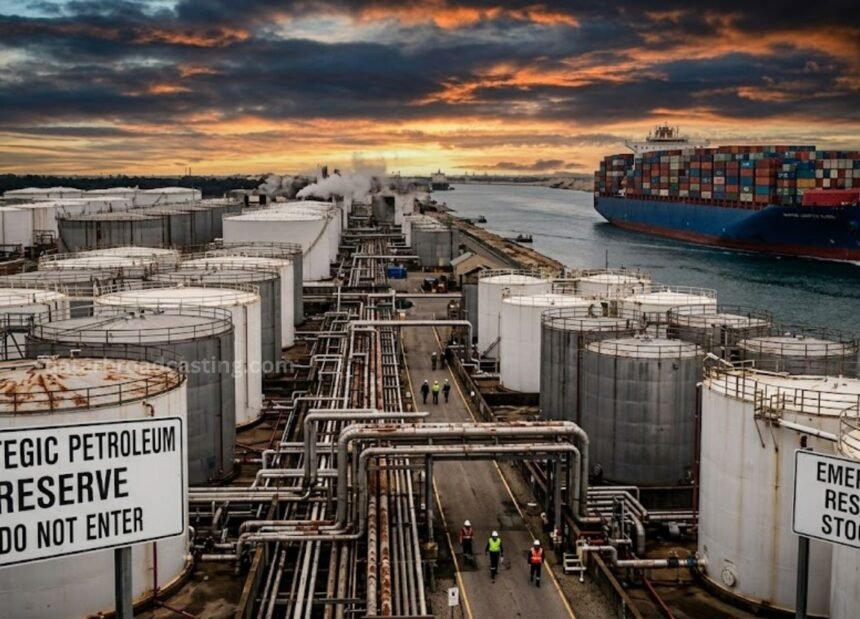

Global oil benchmarks rebounded above $101 per barrel as financial markets evaluated persistent Middle Eastern energy security risks alongside coordinated emergency buffer releases by major importing economies.
International benchmark Brent crude futures gained over 0.9 percent to trade above $101.50 per barrel, while U.S. West Texas Intermediate (WTI) rose toward $90.25. Upward price momentum follows renewed risk premiums linked to maritime transit vulnerabilities around the Bab el-Mandeb Strait, recent drone strikes targeting Saudi pipeline infrastructure, and persistent security risks across the Strait of Hormuz.
The market rally underscores tight global energy fundamentals despite offsetting supply measures. While the G7 and International Energy Agency (IEA) previously announced a coordinated 100-million-barrel emergency oil reserve release over four months to cushion international markets, traders remain focused on real-time transit bottlenecks and elevated maritime insurance premiums across Gulf shipping lanes. Furthermore, OPEC+ maintained its November production quotas without additional supply increases, keeping physical market balances tight.
Energy market strategists note that while operational workarounds—such as Saudi Aramco’s East-West Pipeline (Petroline) transfers to Red Sea ports—continue to provide export alternatives, ongoing security threats along key maritime choke points keep crude price volatility elevated heading into the final quarter.